


Teaching question words in French, Spanish, and Italian is essential because these high-frequency terms form the backbone of meaningful communication in the language classroom. When students can recognize and respond to common question structures, their comprehension and confidence increase. In this post, I’ll show you how my Question Words resources in all three languages make this skill easier to teach… and far more engaging for your learners.
As teachers, our to-do lists sometimes feel like they go on forever. Saving time whenever and wherever we can is critical to keeping our heads above water in the classroom. In this post, I’m sharing how I SLASHED my grading time by AT LEAST 90%, which has given me so much more time to work on lesson planning, admin tasks (which feel like they never end!), and other relevant teaching tasks that actually move the needle forward in my classroom. Click to read more!
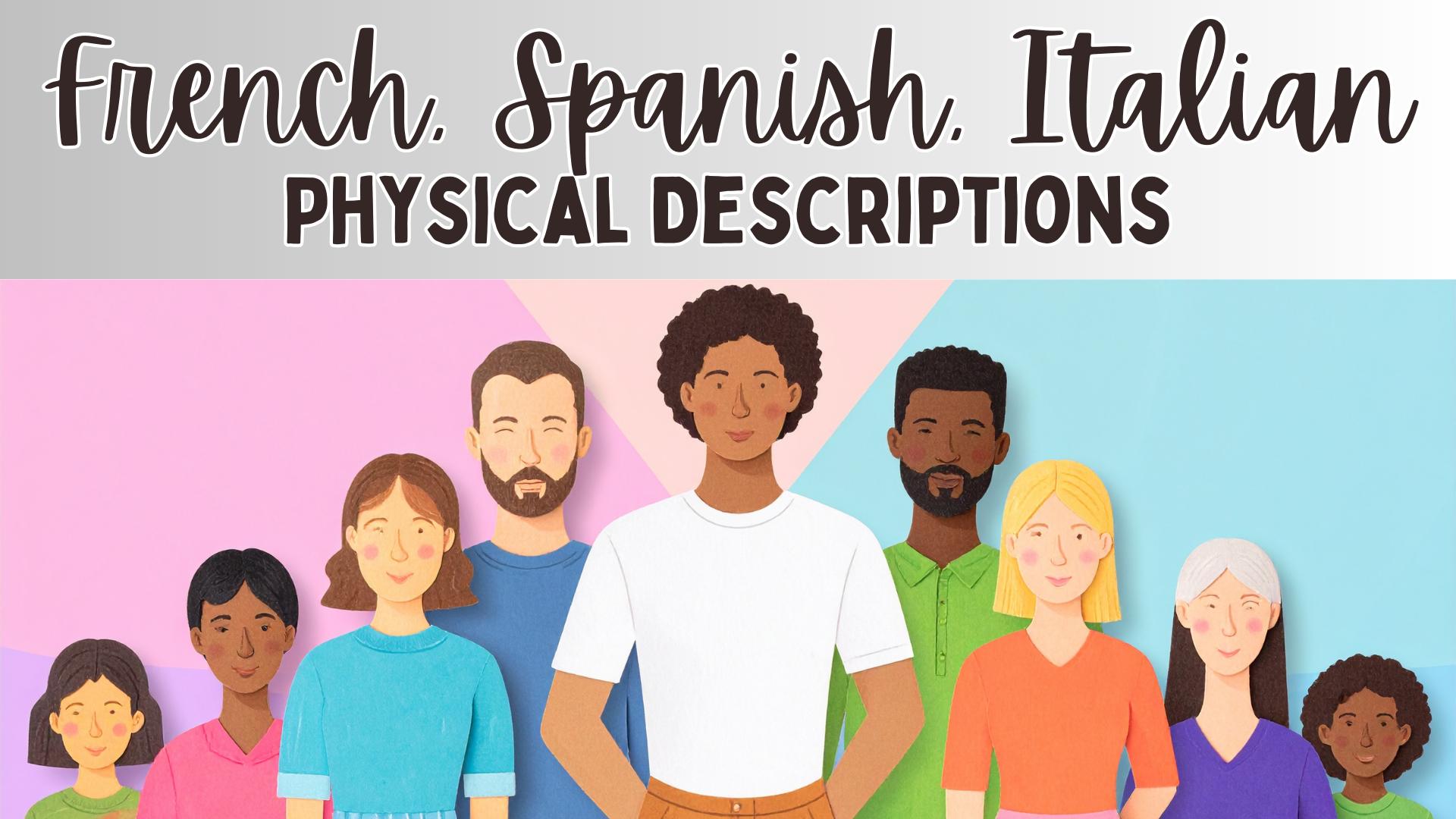
Teaching physical descriptions in French, Spanish, and Italian has always been one of my biggest challenges… not because the content is hard, but because finding truly engaging materials has been nearly impossible. After years of procrastinating on creating the exact resource I desperately needed (and that so many World Language teachers kept asking for!), I finally designed a solution that makes this topic far easier to teach. In this post, I’m giving you a behind-the-scenes look at these new Physical Descriptions resources and how they can save you years of frustration in your own classroom.
Every new year brings a chance to hit “reset” and reflect on what’s working (and what’s not) in our teaching practice. In this post, I’m taking an honest look at some of my biggest classroom pain points from last year and sharing the practical solutions I plan to implement moving forward. Teaching is one of the most rewarding yet challenging professions, and growth often comes from the willingness to problem-solve rather than wait for someone else to fix things. Join me as I unpack lessons learned, small shifts, and big mindset changes for the year ahead.
Listening comprehension can be one of the toughest skills to teach, which is exactly why I created my own listening activities designed specifically for novice learners. After seeing my students struggle with the speed, vocabulary, and off-topic content of typical online videos, I decided to make resources that actually match what we’re learning in class. These activities recycle the vocabulary and grammar we’ve already covered while gently stretching students’ listening skills—helping them build confidence instead of frustration. Each resource is crafted to feel accessible yet challenging, so students stay engaged and motivated. If you’ve been searching for listening practice that aligns with your curriculum, these activities are a game-changer. They’re easy to implement, classroom-tested, and created by a teacher who knows exactly what beginner language learners need.
Music is a powerful tool in the World Language classroom that helps students connect with language on a deeper level. It supports listening comprehension, pronunciation, and vocabulary retention in a way that feels natural and engaging. Songs also provide valuable cultural context, offering a glimpse into the lives, values, and expressions of native speakers. Because music is fun and emotionally resonant, students often participate more willingly and remember what they’ve learned without even realizing it. Incorporating music into lessons brings language to life and creates an immersive, joyful learning experience.
Feeling a bit stagnant or stuck in your teaching practice? Looking to change things up a bit so that you feel creatively and professionally energized? In this blog post, I discuss ways to stay inspired with the lessons you are presenting your students. Whether you’re looking to tweak and freshen up just a couple lessons or interested in completely overhauling a unit or two over the summer, I’ve got practical tips to help you get started.
With vocabulary being such a critical pillar of language learning, it’s essential that we go beyond rote memorization and find creative, low-pressure ways to help students engage with words repeatedly. The more meaningful and varied the exposure, the more likely students are to retain the vocabulary long-term. Whether it’s through movement, visuals, storytelling, or games, these types of activities not only boost word exposure but also increase student motivation and participation. By incorporating fun, hands-on (LOW-PREP!) vocabulary practice into your regular routines, you’re giving students multiple opportunities to internalize new words without it feeling like a chore. The result? Better retention, stronger performance, and greater confidence as they build toward fluency.
As a new school year begins, it’s the perfect time for teachers to reflect and set meaningful intentions. Rather than getting swept up in the hustle, take a moment to ask yourself what kind of energy you want to bring into your classroom. Setting clear intentions can help you stay grounded, focused, and aligned with your core values—especially when things get hectic. Whether it's fostering more joy, building stronger student connections, or protecting your own boundaries, your intentions can guide your daily choices. Start small, stay consistent, and let those intentions shape a year that feels purposeful and empowering.
Ready to Acquire Comprehensive & Engaging
World Language Resources?
Whether you are a French teacher looking for French resources, a Spanish teacher looking for Spanish resources, or an Italian teacher looking for Italian resources, I’ve got you covered! I make high-quality, comprehensive, and engaging teaching resources for World Language Educators that save you hours of prep time so that you can be more present in the classroom, helping your students learn and acquire language! Purchase amazing resources for your World Language classroom today!
“I stumbled upon the World Language Resources TpT store randomly, and I’m SO thankful I did! There’s such an incredible variety of activities, projects, and even presentations that are both engaging and easy to use. And I LOVE that so much of it is editable!”
© World Language Resources, 2026
As the end of the school year approaches and classrooms descend into pure chaos, having ready-to-go projects can feel like a lifeline. That’s exactly why I created four editable, low-prep World Language End-of-Year Projects designed to keep students engaged and save teachers hours of planning and grading. If you’re craving structure, simplicity, and sanity during the most hectic weeks of the year, you’ll want to continue reading!